

SETTINGS, ENTER INVITE CODE: MASSCUE-FREE-WEEK
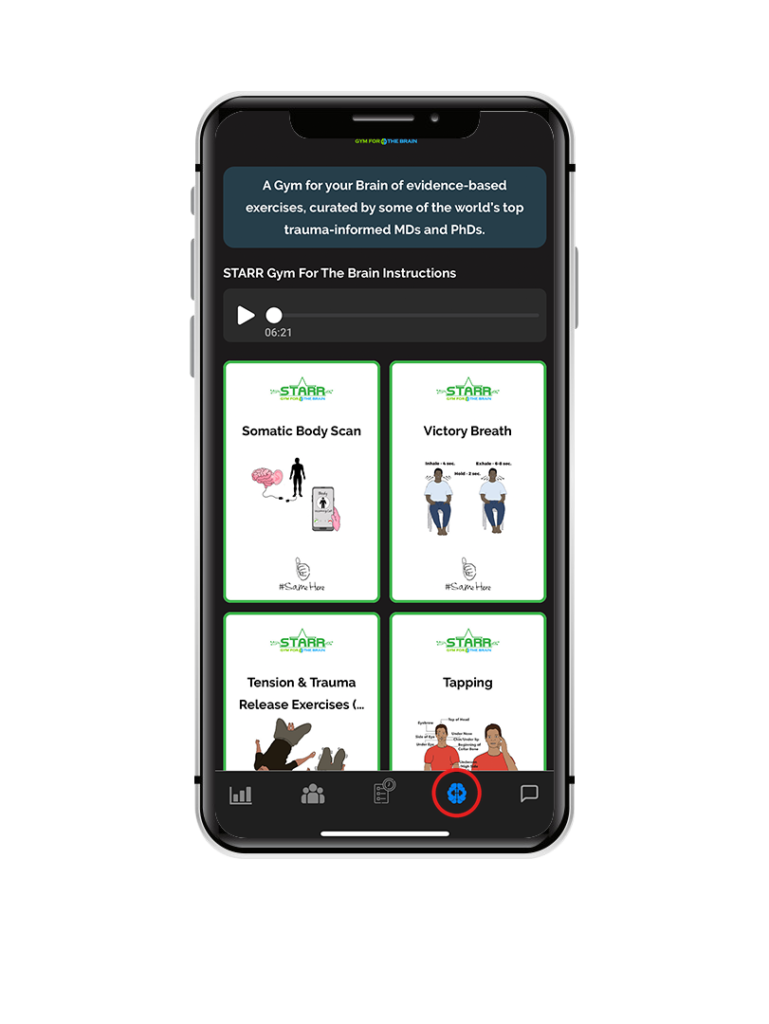
1) Click on the “Brain Gym” icon in the bottom of the navigation bar, 2nd from the right side and select the card for the exercise station you are visiting.
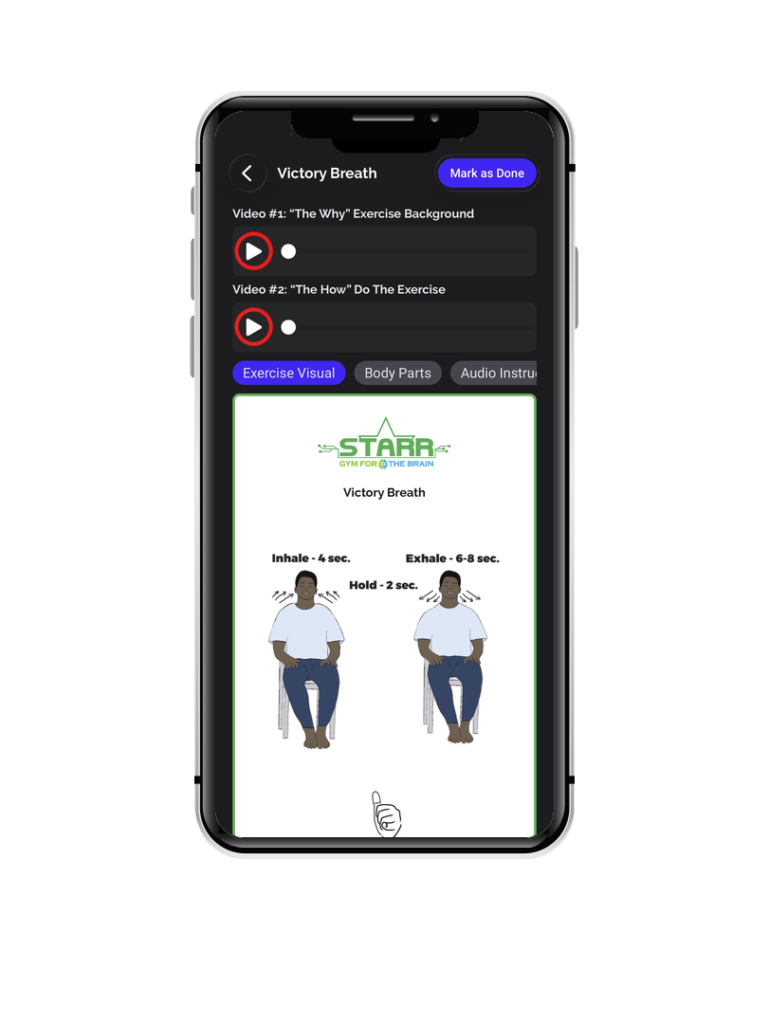
2) Click on one or both videos on top to play either the background understanding or to try the instructional steps of the exercise.
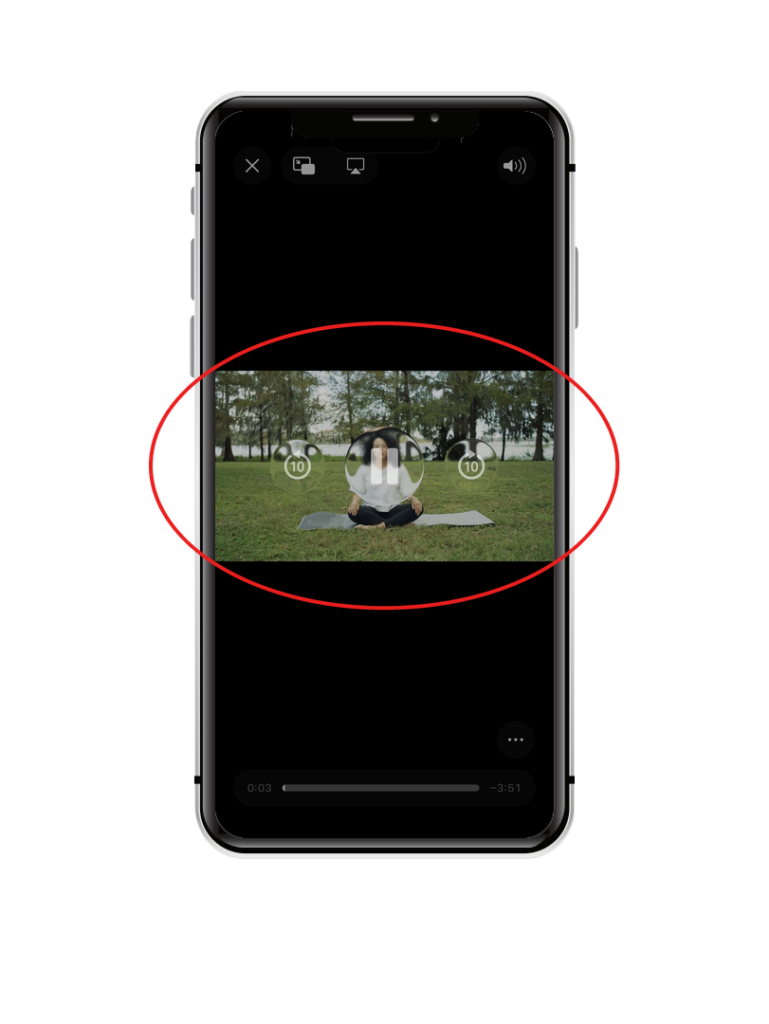
3) Play the videos and follow along with the instructions. A written set of instructions is below. You can advance or rewind the videos as well.
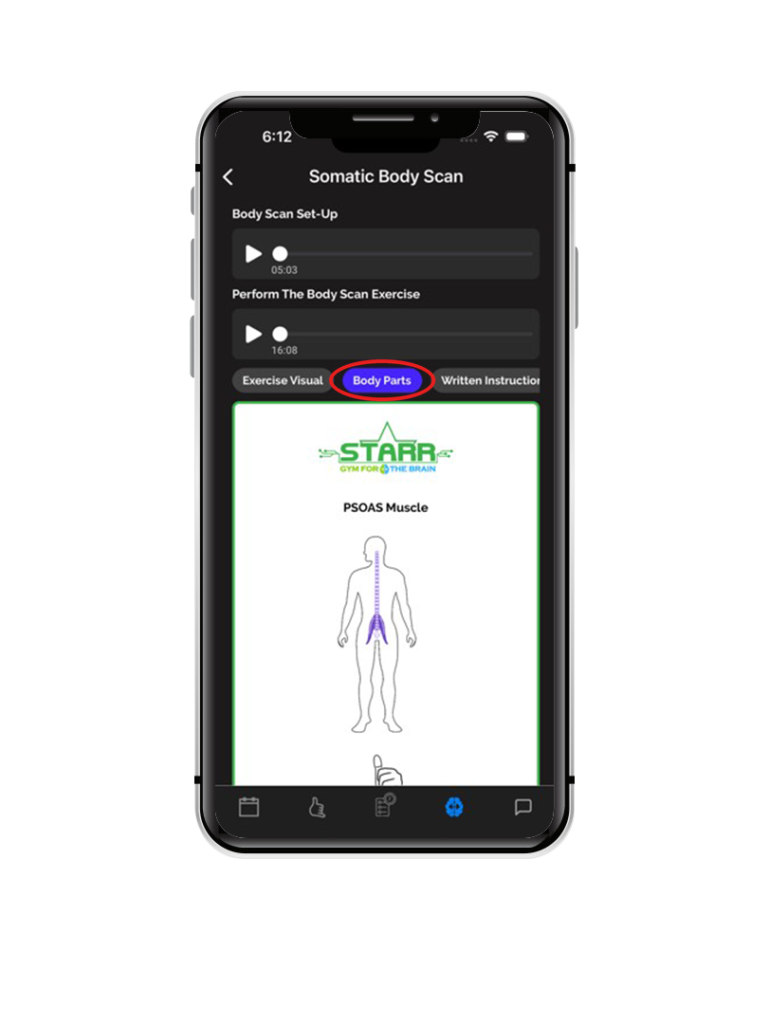
4) Once you become comfortable try out other features like the “Body Parts” visuals and audio explanations, or the “Routines” section – middle icon.
HOW IT'S DONE (STEP-BY-STEP)
• Close your eyes before you begin playing the audio instructions in the app
• Close your mouth and take a deep breath in your nose for three seconds, hold it for two seconds, and then breathe out of your nose for six seconds; repeat this pattern three times before you begin to play the audio instructions
• As you first get used to this exercise, listen to the “Set Up” to the Body Scan, and then follow it up with the Body Scan itself – which lasts a little over 15 minutes; throughout both, you can breathe in whatever pattern and at whatever pace is comfortable for you, in and out of your nose and/or mouth
• After you have listened to the “Set Up” a number of times and understand the reason why you are starting your routine with this exercise, you can skip it, and go straight to the Body Scan itself
• While the audio takes you from the top of your head down to the tips of your toes, just tune the rest of the world out as best you can, listen to what your body is trying to say – without judgment – and notice all sensations beyond any obvious pains you deal with on most days
• You are going to feel all kinds of sensations in different parts of your body that you don’t typically pay attention to – the key is just to listen to those parts and support them; send a message as you go from body part to body part, that any sensation your body is trying to speak to you with is okay
• After you’ve scanned your whole body, repeat the pattern of breaths, with your mouth closed, of three seconds in your nose, hold for two seconds, out of your nose for six seconds
• When you are ready, open your eyes, and you can start to incorporate in your next STARR Exercise, after this Body Scan warm-up; remember there is no “best” exercise to start with and you can try different ones out and read about/listen to what body parts they work on, to make the best decision for you
BODY PARTS THIS EXERCISE WORKS ON:
Here’s how the somatic body scan works. By guiding attention in a mindful way systematically through different parts of the body, this exercise fosters a deep awareness of the physical sensations we carry, & often don’t pay attention to, throughout our busy daily lives.
The somatic scan engages the insula, a region of the brain nestled deep within the cerebral cortex, which is responsible for processing bodily sensations and emotions. As you focus on each body part-say, the eyes, then the shoulders, then down to the chest-the insula becomes activated, strengthening its ability to integrate sensory information with emotional awareness. This heightened, what’s called interoceptive awareness (the sense of the body’s internal state), helps the brain distinguish between real threats and perceived stress, fostering a sense of safety.
During the scan, the brain’s electrical activity (or its brain waves) begins to shift for the better. Typically, under stress, the brain operates in faster beta wave patterns, associated with high alertness and even anxiousness. The slow, deliberate attention of a somatic body scan encourages a transition to alpha wave patterns, which are slower and linked to relaxation, creativity, and a calm yet still alert state. This shift dampens the sympathetic nervous system-the body’s “fight or flight” response-reducing the release of stress hormones like cortisol and adrenaline. Over time, this practice rewires the nervous system to respond with greater resilience to life’s challenges.
A key mechanism of the somatic body scan is its stimulation of the afferent vagus nerve fibers, the sensory branches of the vagus nerve (which is the longest cranial nerve in the body, connecting the brain to vital organs). These afferent fibers, which travel from the body back up to the brainstem, are activated as you tune into bodily sensations. For example, noticing the rise and fall of your chest or the warmth in your hands sends sensory signals via the vagus nerve to the brainstem. These areas interpret the signals as indicators of safety, triggering the parasympathetic nervous system to promote a “rest and digest” state (movement more to the left of the SameHere Scale). This process is like a gentle massage for the vagus nerve, enhancing its tone- its ability to regulate heart rate, digestion, and emotional balance.
The somatic body scan also supports the release of calming neurochemicals, such as acetylcholine and GABA, which further soothe the nervous system. By signaling safety to the brainstem, the practice reduces hypervigilance, allowing the body to relax when no true danger is present. It helps break the cycle of overactivity in the nervous system.
Another benefit of the somatic body scan is its positive effect on digestion. The vagus nerve runs through the digestive organs, and the parasympathetic activation during the scan supports natural digestive rhythms, improving nutrient absorption down in our gut. This, in turn, aids the body in producing the neurochemicals needed for optimal brain function, such as serotonin and dopamine, which are often depleted under chronic stress and trauma. Additionally, by engaging the insula and fostering alpha brain wave activity, the practice enhances emotional clarity, making it easier to process and release stored emotions.
ACTUAL HEALTH BENEFITS
• Modulates Anterior Cingulate Cortex (ACC):Regulates emotions, error detection, and conflict monitoring, no longer perceiving all body sensations as an error or threat
• Sharpens Prefrontal Cortex (PFC): Improves executive function, decision-making, and emotional regulation (puts breaks on amygdala activation)
• Modulates Basal Ganglia: Reduces unwanted movements and habit formation