

SETTINGS, ENTER INVITE CODE: MASSCUE-FREE-WEEK
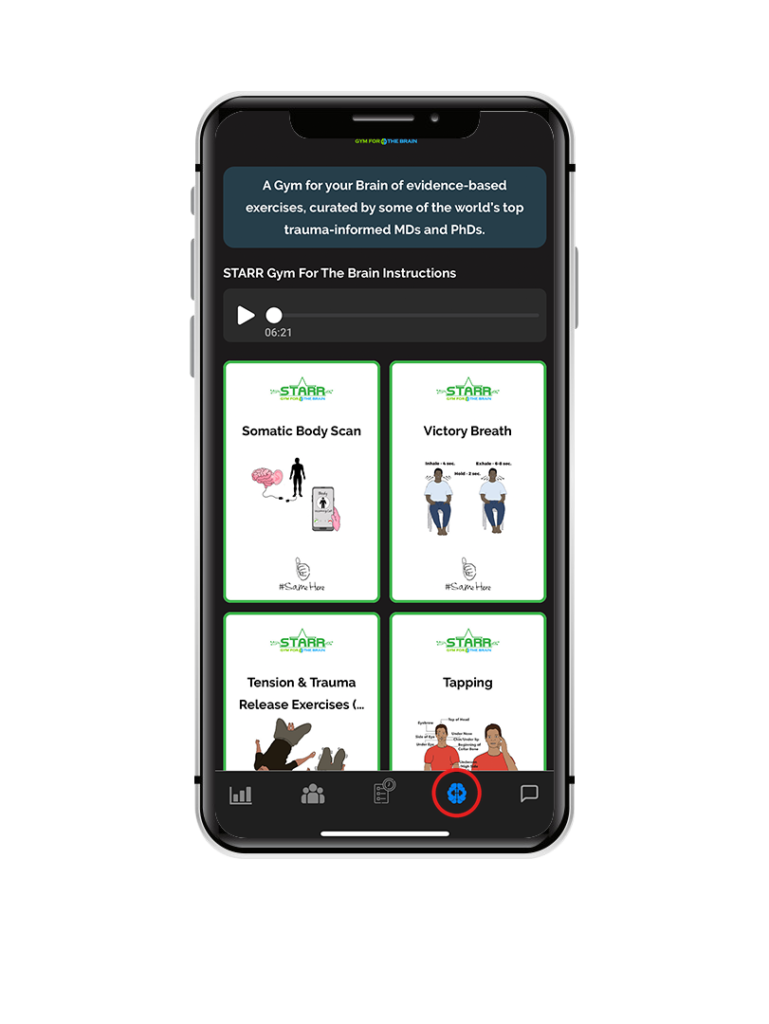
1) Click on the “Brain Gym” icon in the bottom of the navigation bar, 2nd from the right side and select the card for the exercise station you are visiting.
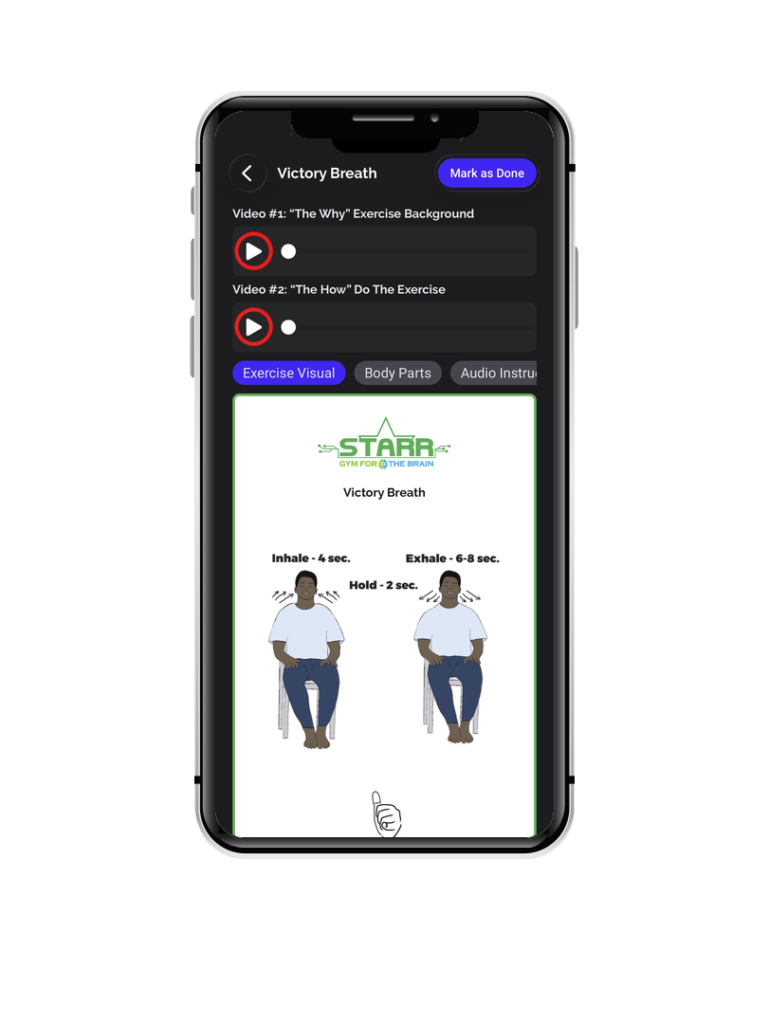
2) Click on one or both videos on top to play either the background understanding or to try the instructional steps of the exercise.
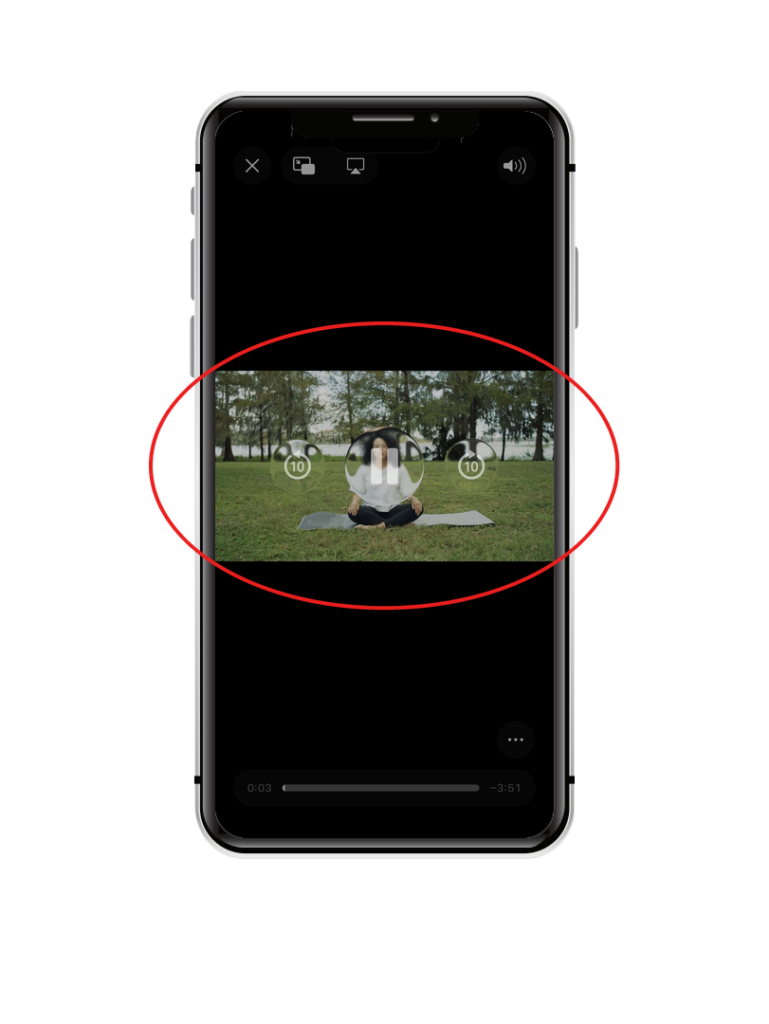
3) Play the videos and follow along with the instructions. A written set of instructions is below. You can advance or rewind the videos as well.
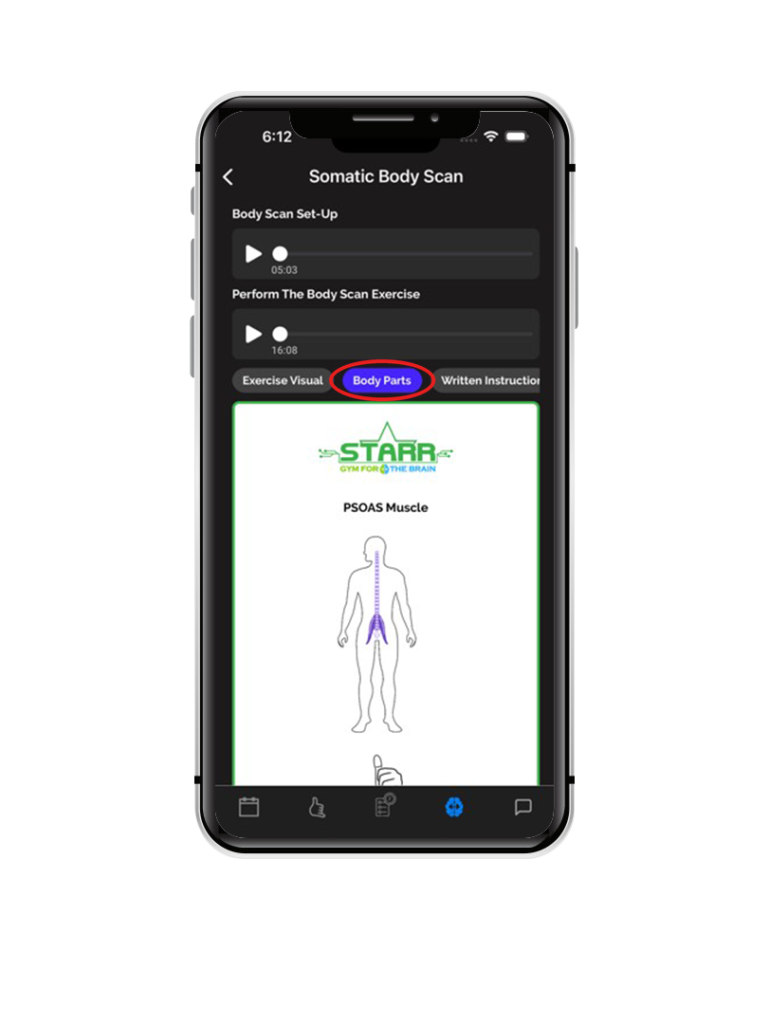
4) Once you become comfortable try out other features like the “Body Parts” visuals and audio explanations, or the “Routines” section – middle icon.
HOW IT'S DONE (STEP-BY-STEP)
• Sit in a comfortable position, back straight; you can be on the floor on a mat, or sitting on a comfortable chair; just make sure you feel relaxed and are holding no tension in your shoulders
• Close your eyes and then close your mouth and breath easily into your nose, picturing that you are tracing the perimeter of the bottom large circle of the snowman as you breath in
• Your breath in should last about three seconds, picturing yourself tracing half-way around the outside of the snowman circle, and then your breath out should last three seconds, tracing around the remaining half of the circle; do 20 in and out breaths like this
• Follow the same pattern of breathing ‘in and out” of your nose only, as you shorten the breaths to a little over one second each, tracing over the
• Finally, follow this same pattern again, with the breaths happening in roughy half a second each, tracing over the perimeter of the top smallest circle with each in and out breath; do 40 breaths once again
• Repeat this pattern three times up the snowman, large circle up to small, and at the end take three very deep slow breaths in and out of your nose, filling up and emptying your lungs; remain seated until you feel centered and relaxed, and now you are ready to get up and continue with your day/night
BODY PARTS THIS EXERCISE WORKS ON:
Snowman Breathing enables you to develop flexibility in how you respond to stressful and traumatic events, ensuring that your nervous system doesn’t get stuck in a rigid response. But what does this mean, exactly?
Naturally, we typically all have an easy, smooth, and rhythmic breathing pattern. But, that pattern changes based on the stimuli around us. For instance, witnessing a car accident might cause us to breathe-in abruptly as we take in the scene.
Similarly, during any other stressful or traumatic event in our lives (or when we get stuck thinking repeatedly about these events), our breath tends to shift away from its typical easy, smooth, and rhythmic pattern. The good news is that we can increase the speed at which our breathing patterns return to their natural easy state after these stressful and traumatic events.
By practicing Snowman Breathing correctly, we can face these challenging life events with greater resilience, knowing our body will adapt more quickly. The key to Snowman Breathing lies in practicing three different speeds and patterns, and seamlessly transitioning between them.
This breathing practice conditions our vagus nerve (the longest cranial nerve in our body – that connects our brain with our other organs) and prevents it from becoming locked into a single state when our body perceives an ongoing threat. This concept is similar to athletic training, where athletes engage in lifting heavy, medium, and light weights for each muscle group. By doing so, they develop the ability to adapt quickly to different situations that are needed on the playing surface – whether it’s an explosive move or a situation requiring them to hold their ground with great strength. Throughout a game, they will need to shift from one way of using their muscles to another many times, back and forth – whatever the situation in the game calls for.
ACTUAL HEALTH BENEFITS
• Greater cognitive function
• Enhances quality of sleep
• Increases resiliency to stressful situations
• Improves immune system function
• Promotes greater cardiovascular and respiratory function