


SETTINGS, ENTER INVITE CODE: MASSCUE-FREE-WEEK
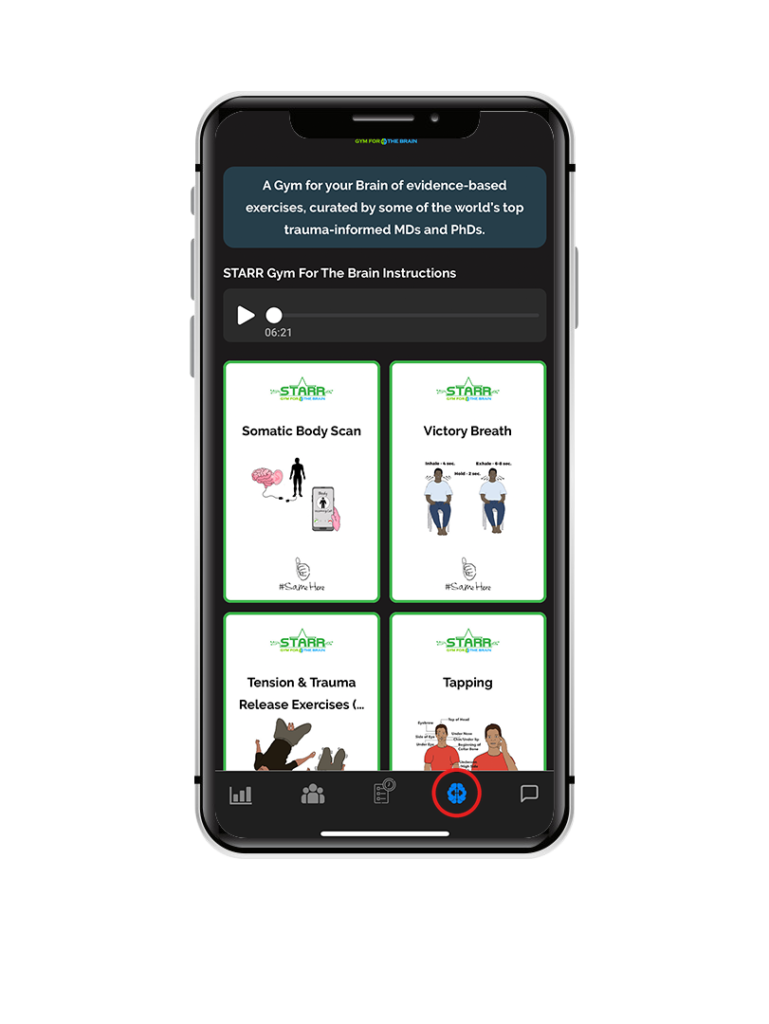
1) Click on the “Brain Gym” icon in the bottom of the navigation bar, 2nd from the right side and select the card for the exercise station you are visiting.
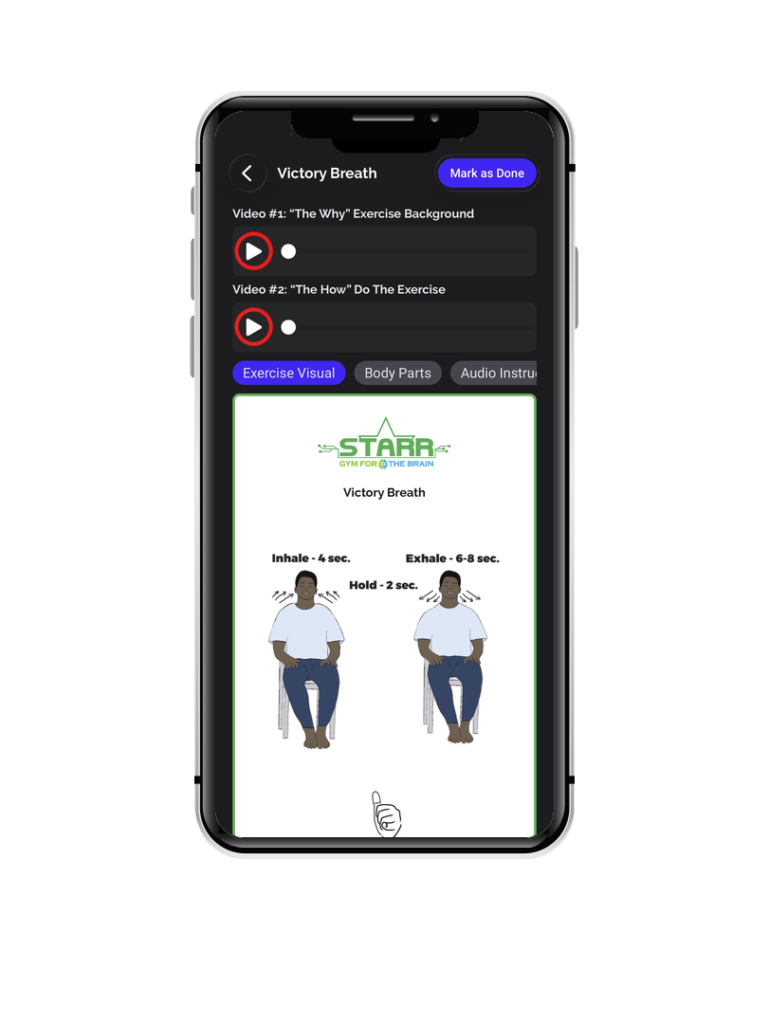
2) Click on one or both videos on top to play either the background understanding or to try the instructional steps of the exercise.
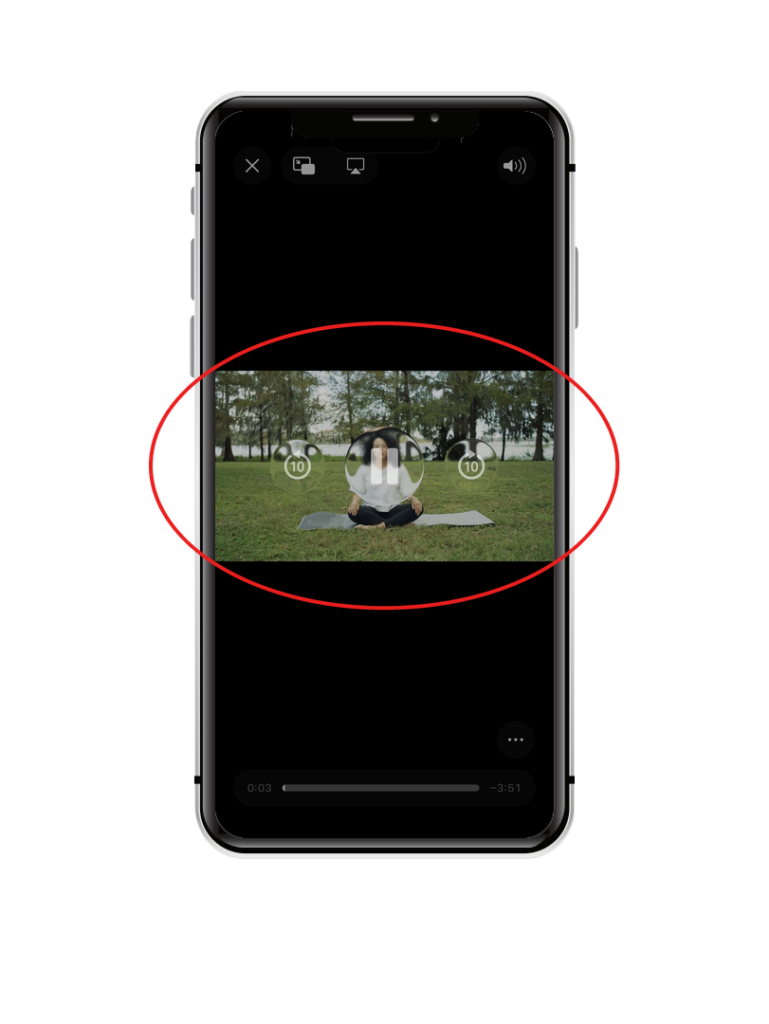
3) Play the videos and follow along with the instructions. A written set of instructions is below. You can advance or rewind the videos as well.
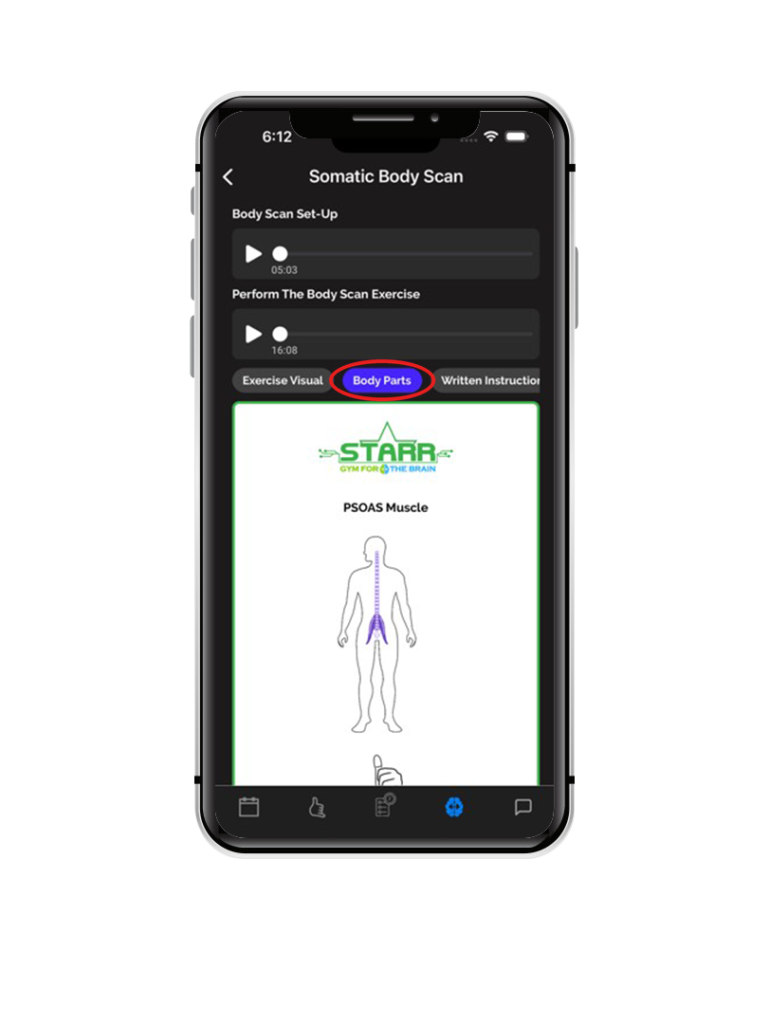
4) Once you become comfortable try out other features like the “Body Parts” visuals and audio explanations, or the “Routines” section – middle icon.
HOW IT'S DONE (STEP-BY-STEP)
• Then, bring your hands on each side down your arms, to your elbows at the same time, and as you do so, close your eyes
• Continue this pattern, gliding down to your elbows and back up your shoulders, three times
• Next, bring your hands together in front of your
• Then, bring your hands back up to your shoulders and repeat the preceding instructions – first down and then up your arms, then the washing your hands motion
• As you continue to repeat these patterns with your hands, think of a particular current or past situation or event that may have upset you, and say aloud the prevailing emotions that come to mind, e.g., anger, sadness, fear, anxiousness, confusion, or any combination that fits
• By saying them aloud and doing the hand motions, you are “soothing” those negative emotions and re-engaging the comfort mechanism you came to know as a child for never experienced if a care giver never made you feel safe)
• Continue the practice between the arms, hands, memories and words for a few minutes, until you feel that your negative emotions have lessened
• Next, do a round of Havening where you think about a positive and joyous memory; say aloud the prevailing emotions that come to mind, e.g., happiness, joy, contemptent, relief, relaxation, calm, or any combination that fits
• Alternate between the negative and positive rounds of Havening – used back and forth to enable the rewiring process; the alternation enables us to lessen the negative emotional charge that stems from challenging life events
BODY PARTS THIS EXERCISE WORKS ON:
This tension from challenging events often takes root in the brain, particularly in the amygdala-the fear center that keeps us on high alert when we feel threatened. Why this area? Think of how an infant enters the world: Their birth strips away the womb’s safety-food, air, warmth-and the sudden overwhelm they feel triggers crying and distress.
Havening offers a way to rewire this response by harnessing the soothing power of touch, much like how that infant is comforted by their early caregivers during distressing events. Through gentle, deliberate self-touch-often on the arms, face, and/or hands-while recalling the feelings we had during traumatic events, Havening intertwines a sense of safety into the fabric of those memories. Picture it as threading a calming signal through the fear, so that future reminders evoke reassurance instead of panic. The technique targets the amygdala, calming its reactivity and reducing the intensity of those ingrained fear responses.
Havening provides additional benefits through its bilateral movements (because we are using both of our hands and arms simultaneously), which enhance activity in the corpus callosum-the structure connecting the brain’s left and right hemispheres. This improved connectivity fosters better integration of thoughts and emotions, creating a more balanced mental state.
parasympathetic EEG waves which are associated with relaxation-helping the nervous system settle into a restorative mode. By practicing Havening, you not only soften the grip of past trauma but also cultivate a renewed sense of calm and presence, empowering your mind and body to thrive.
ACTUAL HEALTH BENEFITS
• Promotes an immediate feeling of self soothing and calm
• Offers an incredibly quick release of anger
• Reduces anxiousness
• Reduces repetitive thinking
• Enables deeper and better sleep
• Effective in addressing panic attacks and phobias
• Quiets our nervous system, reducing the secretion of uric acids which can cause flare-ups of our gastrointestinal system